
The Fifth Sunday in Lent
Living from the Liturgy
‘Why do you not understand what I say? It is because you cannot bear to hear my word.’
+INJ+
We cannot bear to hear the Word of God. And the reason is simple. We are not children of Abraham, nor of the Covenant, nor of Moses. We are not the heirs of the prophets, nor of the angel Gabriel, nor any messenger of God. These all, indeed, were given to us as our birthright, our fathers in faith, and the deliverers of God’s divine promise, and with them, all that was revealed to them by God; but they are not ours, because we reject them; we cannot stand the words of God, we cannot bear to hear them.
The voice of God thundered upon Mount Sinai. The God who in love delivered the people Israel from their manifold idolatries and slavery in Egypt spoke, not just to Moses, but to all of them, even the little children. But the people were terrified. God sought to give them His Law, the Ten Commandments, that they might no longer walk the highways of darkness, but rather might know the paths of peace.
‘But all the people witnessed the thunderings, the lightning flashes, the sound of the trumpet, and the mountain smoking; and when the people saw it, they trembled and stood afar off. Then they said to Moses, “You speak with us, and we will hear; but let not God speak with us, lest we die.”’
The word that they could not hear is no different than the word that the Jews and Pharisees could not bear from Jesus; it is the word that even now we cannot stand. It is the word explained with ten simple commandments, and summarized in two: Love the Lord your God with all your heart, with all your strength, and with all your mind, and love your neighbor as yourself.
In the end, we reject God not because He is difficult to believe in. We do not reject Him because science has proven Him wrong. He is not hard to believe in, for if that were so, all of humanity before us, and the vast majority even now, would not hold to the existence of the divine. If science had proven Him wrong, then it would make some case against Him, but it does not.
We reject Him because what He asks of us is simply too much.
‘Love God with all your heart.’ It seems like a pleasant statement, something that one could put up over a door. But if one loves God with all one’s heart, what part of his heart will be left to love his wife? To love his friends? To love, most importantly, himself? Does God want us to love Him above these things? He has given us wife and friends, children and home. Should we not love them as a gift? And yet God would have no one share room in our heart against Him. He is a jealous God. And He knows that we cannot love anything else without forging it into an idol, a darling which we reckon to be higher than God, perhaps not in some hypothetical general way, but definitely in each specific instance. If given the choice between spending time with our friends, and praying, we will choose our friends. When given the choice between speaking with our wife, and meditating upon the Scriptures, we choose our wife. If given the choice between a trip, and going to Church, we choose the trip.
You might say, ‘well, we will just pray later, our friends are here right now.’ But even then, you have made speaking to God second to speaking to another. Now the Scriptures will become second to your wife, and Church second to the trip.
But would God have us be a bad husband, or a bad friend, or live a boring life? Most of the time, perhaps not. We are lucky, that the will of God so often coincides with what we would like to do anyway.
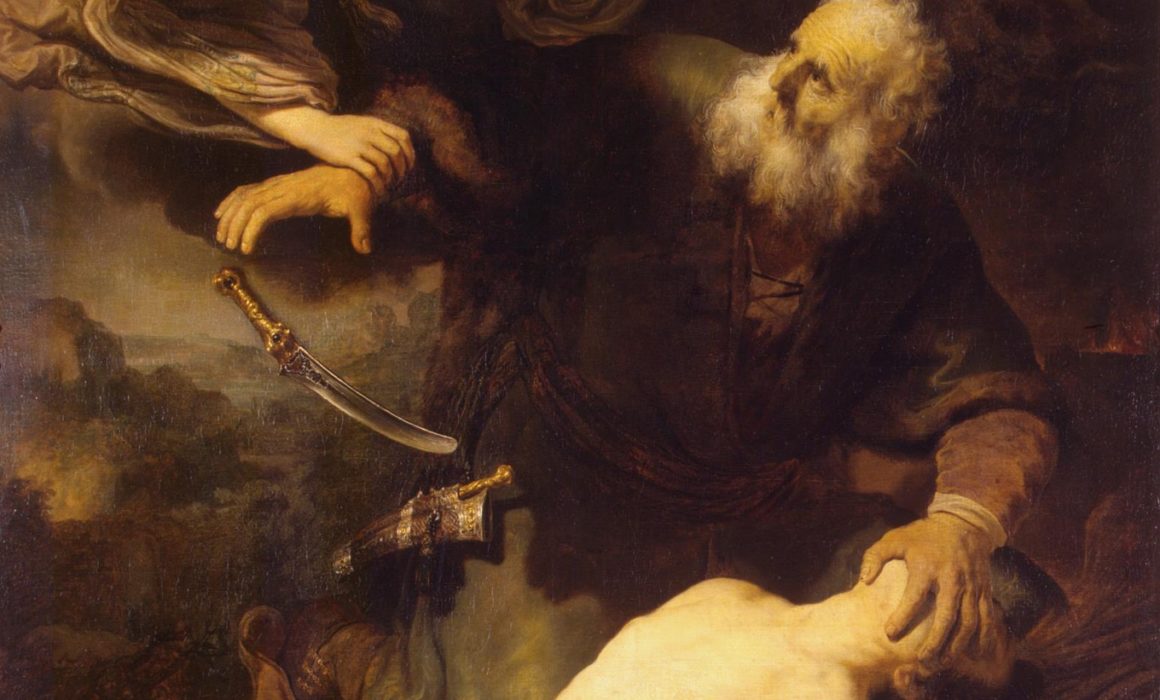
But one must ask Abraham if God wanted him to be a bad father when he was asked by God to kill his son.
When one is given such a test as this, it comes into stark relief, that one cannot be a so-called good father, and also love God, or a so-called good friend, and also serve the Uncreated. One must merely love God, and pray that the rest will be added unto you, even as Abraham loved God, and his son was given back from death.
‘If any man come to Me and hate not his father and mother, and wife and children, and brethren and sisters, yea, and his own life also, he cannot be My disciple.’
This is the Word too hard to bear.
Here I have only spoken of the first of the Greatest Commandments, and not even of how it applies to our love of self. For some of us, against God’s desire, will cease to love our spouse, and daily act as if we didn’t. Some of us, against God’s desire, will cease to serve our friends, though daily we act as if we didn’t. But we never cease to love ourselves. We might pity ourselves, wish we were better, seek to improve ourselves, deplore our faults. But all those are acts of love, a sweet misericordia, the wretched pity of the heart upon our own existence. If our love for spouse and friends and travel might falter, and yet even these we prefer to God, will you lie and say that you would put God above your own self, the love of which never falters?
And I need not speak of the second of the great commandments. For if you cannot love God above yourself, you will never love your neighbor as yourself.
You will never understand the God that reveals Himself to you today, in the body, and in the blood, for you cannot bear to hear his words.
For you are not by nature a child of God. Rather, you are of your father the devil.
We do not believe God, who is Truth, and so we do not believe in the Son, who is the eternal Word of truth spoken into the world. Rather, we believe our father the devil, who is a liar, and the father of lies, even as Jesus tells us.
It is an interesting thing here. The Greek of the Bible does not say that the devil is the father of lies, as if he is simply the source of some generic dishonesty. Rather it says, he is the father of the lie. The one lie; but what is that?
It should be obvious to us who hear the devil’s lie, day after day, in a cycle within our minds. It is a simple lie, like a slogan, even a slogan that one might put on a book. It is the lie that ‘God is not great. He is not even good.’
Why would God have Abraham sacrifice his own son? Why would God have us forfeit our father and mother and wife and brothers and sisters to follow Him? Why would he forbid so much that brings us pleasure and makes us happy? Why would He ordain so much suffering to befall us in this life, cancers and accidents and cruelties and disasters, and even command us to bear it with joy?
The devil gives a simple answer: God is not good. He may be the Creator. He may be the source of all existence. But He is a bad God, even an evil one. And to love anything that is at least a little good, like your friends, your family, your possessions, yes, even yourself is better than to love Him, who is not good at all.
For if that is the lie, then Satan’s greatest commandment is simple as well: Believe the lie with all your heart, and all your strength, and with all your mind, and love the idol as yourself.
And this we do, as good children, obedient to their caring father.
Perhaps we might not want to believe the lie. Perhaps we want to trust in God. We seek to rationalize God’s seemingly unkind will with philosophy and platitudes, or we seek miracles of God to prove His goodwill towards us in the midst of our obvious suffering. The Jews seek after signs, and Greeks after wisdom. But these we are not always given, nor are we promised to be given them, for God has no desire to prove anything to us. Rather, He is a god who hides himself.
He asks us to trust Him against all evidence of His goodness, and believe in Him against all proof that He will come. And yet He gives us no reason to hope, for He is hidden beneath the veil of this life’s anguish no less than He once hid behind the curtain of the Temple.
He is hidden. And we want to know why. If He exists, why does He not just prove Himself? If He is good, why does He not save us from our… from this… from…
But He is hidden. He is hidden because no man may see God and live.
After accusing the Jews of being children of Satan, and proclaiming Himself to be God, they attempt to stone Jesus, but it is written, ‘Jesus hid himself, and went out of the temple.’
He is hidden for He will only be revealed in the cross.
After the reading, we put the Lenten veils upon the crucifixes of this Church. [The art of the church will be left to rest.] For we will not know God, until on Good Friday, we will confess only Christ, and him crucified.
Look to the man Jesus Christ, who now walks the road to Golgotha, to be nailed to a tree, to be crucified for us men, and for our salvation. It is there, and there alone that He shall reveal Himself, and that the God who hides Himself shall become the Father of the blind who once walked in darkness, but now have seen a great light. He will reveal Himself there, for only there, shall you know that there is a God. And only in eating the fruit of the tree, and sipping upon the nectar of its branches, shall you taste, and indeed know that the Lord is good. Only here, at this meal that will be set forth before you today, will you confess that you believe in God, [the good Lord].
Drink, I tell you, the blood of God, and eat the flesh of the pierced Life; for there, and there alone, will you know that God so loved the world. And knowing the Lord’s promise to redeem His people Israel from the fear of their enemies, you will say to yourself:
Why are you cast down, O my soul,
and why are you in turmoil within me?
Hope in God; for I shall again praise him,
my salvation and my God.
+INJ+
Preached by Pastor Fields
Sermon Texts: Genesis 22:1-14; Hebrews 9:11-15; John 8:42-59.