
Sermon for the First Sunday in Advent
‘But concerning the day and the hour, no one knows.’
+INJ+
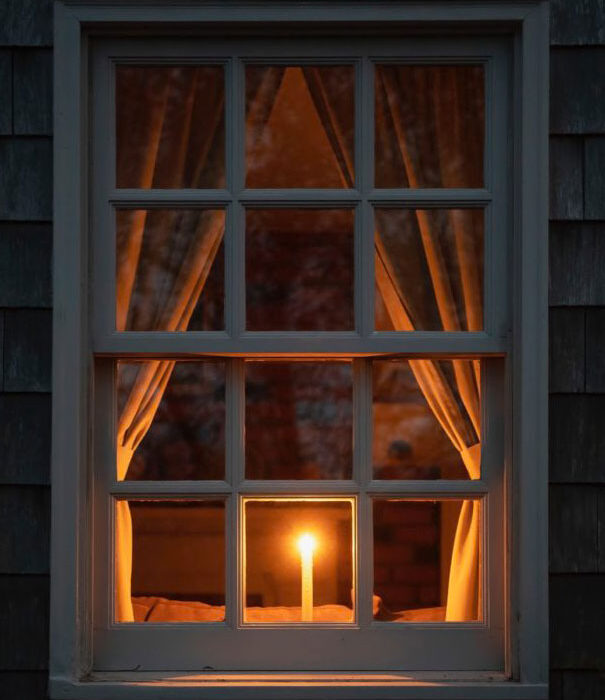
It is the oldest of Advent traditions to light a candle. Some put electric candles in their windows. Some light their own Advent candles. At church, we begin to light the candles of an Advent wreath.
I once noted, for the benefit of the members of this congregation who were not previously Commonwealth subjects, which is everyone, save one, that when the British are waiting for someone to arrive, they say, ‘I’ll put the kettle on.’ They’re British, so they drink tea. In normal countries that did not participate in that once nearly universal empire, we simply say ‘I’ll keep the light on.’
This is how one says that one is waiting for another. In fact, this is how people in all times and in all places have waited for another, to keep the light on, to keep the candle lit, the candle of Advent; Advent, a word that means ‘the coming.’
During this season of Advent, we await the coming of the Christ, for this season will culminate in the birth of the Lord made flesh, of Jesus, born of St. Mary.
This is easy to wait for, for it is such an obviously happy occasion. Who does not enjoy the coming of a new baby child? They may bring sleepless nights, but that is the parents’ problem. For the rest of us, they bring joy and laughter and adorable cuteness.
Even more so, we await not just the birth of a child, but the birth of a child that will work for us our final redemption. We sing of the silent word pleading. Pleading, even as an infant, to our God in heaven, that He would adopt us as His children by baptism, and that He would become our Father.
But there is another coming of Christ that Advent celebrates: the coming of Christ not just in the flesh once upon a time two thousand years ago, but His coming in the flesh and the blood every Sunday.
Indeed, every Lord’s Day, every Eucharist, is a Second Coming; it is a Last Coming, as we eat and drink the Last Supper. Not A Last Supper, but The Last Supper, the very one shared by the Lord with the Apostles. For this reason, every Sunday we say, ‘this do as often as ye drink it in remembrance of me.’
We do not celebrate a ceremony on Sunday, we greet our Lord. You do not hear a sermon, you listen to the God who is about to welcome you.
A sermon is worthless. Meaningless drivel dreamed up by a man in black clothes to bore you for ten minutes. That is, it would be worthless, if it were not a prayer, praise, and introduction to the God of the universe made flesh upon the altar. The words of a pastor’s imagination are nothing; they are only made something by the Word made flesh that calls to you ‘eat, drink.’ It is these words that make useless talk into a sermon, and a sermon into the Word of God.
It is important to always keep this in mind, the reason for the sermon. We often think of the sermon as a ‘message’ or ‘instruction,’ something to teach us about God, something to inspire us to good works, something to make us more knowledgeable about the Scriptures.
These are all good things, and a good sermon often does these things. But that is not what a sermon is for. If that were the goal, then I would teach for a couple hours, with a powerpoint slides and donuts, and offer a bathroom break at forty-five minute intervals. You all may have noticed that these are generally lacking during the Divine Liturgy, and woefully lacking during the sermon. Instead we offer coloring sheets for the children, and even that as a concession to their weakness.
The sermon exists as nothing else but a preparation, that in some small way the glory of Jesus, the Christ, might be made visible to you; that you might see His face, painted in words, for but a minute, for shortly you will see Him drawn in flesh, and colored with blood, upon the altar. The sermon asks you not to understand the Lord better, but to see his radiance, even if through your fingers, and wincing, for you are about to kneel before His throne, and eat from His table.
For again, the Lord is coming, even now, this morning, this minute, to pour His majesty into you. Will you not then endure the sermon, which is little more than a declaration of His great and mighty works by a herald as He walks through the palace gate into His courtroom? His sanctuary? His home, which is His temple. His temple, which is your body, where today He is pleased to dwell.
Yet neither of these two comings of Christ does our Lord speak of today. Neither His incarnation on what we now call Christmas, nor in His dwelling with us in what we call the Eucharist.
He speaks of the coming that the Creed speaks of, the coming when He will judge both the living and the dead, whose kingdom will have no end.
The coming where he shall break the heathen with a rod of iron, and dash them to pieces like a potter’s vessel.
The coming where every knee shall bow and every tongue confess that He is Lord, in heaven and upon earth and beneath the earth.
The coming where he shall make the nations his footstool. Where his sword shall devour. A day of vengeance. A day burning like a furnace, to make desolations upon the earth.
‘A day of darkness, and not light.’
‘O Lord, if thou wouldst count iniquities, O Lord, who should stand?’
None can stand, none can walk in the darkness, the darkness of the Day of the Lord.
Yet it is written ‘thy word is a lamp unto my feet, and a light unto my path.’
The dread day of the Lord is coming, yet we are not as they who have not hope. We do not fear it, we await it. We await the coming of the Lord; for His justice is our justification. His Kingdom is our Gospel, [we are not commanded to be sinless or perfect; but only to wait in hope] and so we keep the light on, and if you are so inclined, keep the kettle on. We burn the candle, for by its brightness, the day of darkness to the faithless is made the day of light, the day of the light that came into the world.
As it is written, dear children: let us walk properly in the light of the day.
For this reason, the newly baptized are given a candle. They too, in their infancy or old age, wait. Theirs is the dominion, the vengeance, the confession, the grace.
Yet let not the coming of the Lord to judge the living and the dead be left only to small children.
‘For the Son of Man is coming at an hour you do not expect.’ Indeed, like a thief in the night.
‘Therefore, you too must be ready.’
This day will come, dear Christians, when the Lord will appear, and you will see with your own eyes what a good sermon promises, but fails to give; what the Eucharist gives, but we fail to see. You will see with your own eyes what the Virgin Mary first saw on Christmas day:
His sacred face, evermore, and evermore.
+INJ+
Preached by Pastor Fields
Sermon Texts: Isaiah 2:1-5; Romans 13:11-14; Matthew 24:36-44.