
Sermon for the Feast of Pentecost
‘But the Helper, the Holy Spirit, whom the Father will send in my name, he will teach you all things and bring to your remembrance all that I have said to you.’
+INJ+
On this most venerable Feast of the Pentecost wherein we commemorate the sending of the promised Holy Spirit to the Apostles, and the bestowal of its power upon the Church, we are forced to face a most inconvenient truth: most of us do not really know who the Holy Spirit is, or what He has come to do.
The Father we know well, the heavenly creator and source of all existence, from Whom all things come, and to Whom all things have their end. The Son we adore and worship, for it is the Son who, in obedience to His Father, came down from heaven and was made Man, that He might be sacrificed for our sin and be offered as an atonement for our iniquity. By His blood we are forgiven, even as by His flesh we are healed.
Yet the Spirit is not so easy to pin down, so to speak. There is no book of the Bible dedicated to Him, as the Gospels are to Christ. He is not the object of long theologizing discourses as the Father is when we read the Prophets and the Epistles. Rather, He seems to get only scant mentions here and there, from the mouth of our Lord on some occasions, in the narratives of the book of Acts, and by the pen of St. Paul when he speaks of the Spirit as a gift that we receive.
Sometimes it can seem somewhat awkward to even refer to the Holy Spirit as a ‘He,’ as a person, even though the Creeds of Our Holy Faith declare Him so.
For this reason, Christians have speculated wildly, and taught broadly, even heretically, about the role of the Holy Spirit. There are those who believe the Spirit is a sort of power that is poured out into us, to fill us and give us supernatural abilities. There are those who believe that the Spirit gives new and often diverse revelations to be added to the words of the Bible, speaking through modern day prophets. And there are those, as is sadly sometimes the case with us, that, not entirely comprehending the work of the Spirit, choose to mostly ignore Him as the so-called ‘silent partner’ of the Trinity.
And yet, what we need to know about the Holy Spirit is plainly given us in today’s reading.
‘The Helper, the Holy Spirit, will teach you all things, and bring to your remembrance all that I have said to you.’
The word here used to describe the Holy Spirit, translated as ‘helper,’ is, in the original Greek, the word ‘paraklete,’ a difficult term to immediately understand. Rendered in our Bibles sometimes as helper, comforter, or advocate, it means literally something like ‘someone who proves your case.’ It is, in fact, not even a Greek word, but a Greek borrowing from the Latin word for a ‘lawyer.’
Yet, despite the good work that godly lawyers do in our nation of laws to defend the rights of their clients and sustain an orderly society without recourse to violence, it still does not quite seem right to us to describe one of the Persons of the Trinity as a ‘lawyer.’ In the worst of minds, it is an insult; in the best, it is at least unromantic. Yet this is because, as is often the case, we are so far removed from the time of the Scriptures that much is sadly lost to us.
The Roman ‘lawyer’ we are speaking of here is indeed an advocate that speaks on behalf of a client; yet unlike our modern legal system, they would not be representing the accused. Rather, it was the role of the paraklete to represent the gods.
As in any legal case, both parties were to argue for their position, offering evidence and logical arguments in their defense. Yet, it was not enough among the Romans to argue that one had the facts of their side. It was necessary that they had heaven on their side as well. Thus, a paraklete would be summoned to argue at length that the gods stood in approval of one side over and against the other.
The paraklete existed to bring humility to the seeming wisdom of men, and against it bring the will of God. He would bring forth evidence on behalf of a client arguing, not that he was innocent or guilty of this or that act, but rather arguing that the client’s life had proven that he stood in well with the Almighty, and that if the jury wished to do the right thing, they would decide in favor of the client, since to do so was to decide in favor of the Heavenly Law itself.
What then, is the role of the Holy Spirit, the helper, the comforter, the advocate?
It is as Christ says, to bring to your remembrance all that I have said; to teach you all things; and to look forward to what the Lord will teach before His crucifixion, the Spirit will convict the world of its sin.
The role of the Spirit is to testify on behalf of Christ. But this does not mean that the Spirit merely enlightens our hearts, allowing us to believe in the Gospel, though this is certainly true.
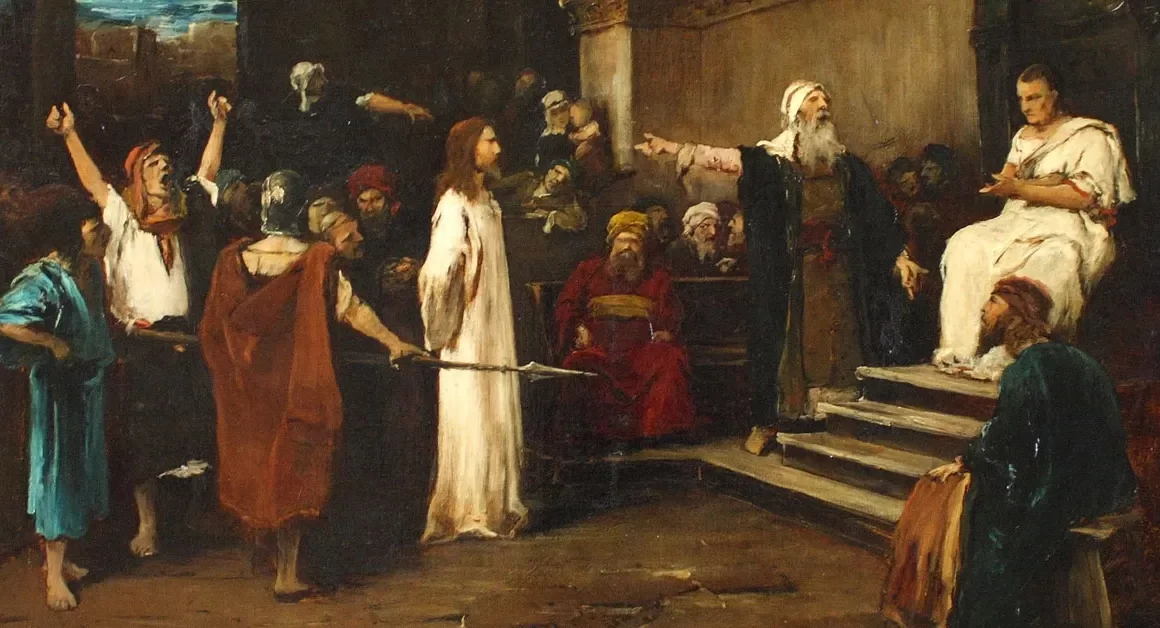
The Spirit has come to testify to something specific. He has come to testify that the justice and philosophy and righteousness of man is cruel, and foolish, and wicked. For we crucified the Lord of glory. In our malice we drug the Christ before Jewish courts and Roman tribunals and before priests and teachers and scribes and rabble; before every thing that could be called ‘man in his wisdom’; and the verdict set by man against the Son of Man was unanimous and universal, that He should be put to death, and quickly, that His blood may not stain our hands into the holidays.
Now the Spirit comes, a paraklete, to speak God’s judgment against the world, to convict the world of its sin; not merely of our many and various sins, both grievous and petty, of which we are surely guilty, but of the one, perfect, and infinite sin: that we murdered goodness and being and life itself; that we killed God in Christ.
Where our logic and evidence and rhetoric condemned the Son of God, now the Spirit comes to speak on behalf of the Father, His only client, and to render His decision; and the decision is for all to see, for on the third day, the Son was raised from the dead by the glory of the Father.
It is this, that the Spirit will remind us of; it is this that He will teach; for He will bring to our minds all that the Scriptures have taught us, of the great promises and prophecies and parables, and words; of psalms and the teaching of the Law: all things as they speak of the Son of Man, how He must suffer many things, and be killed, and on the third day rise again.
We seek from the Spirit no new revelation, no new word; but only that which the Lord promised by the Spirit, that we be reminded of all that was taught concerning Jesus, of His passion, death, and resurrection, for this is the final decision of the Ancient of Days, of the God above all gods.
Yet the Spirit reminds us of one more thing: ‘Blessed are you when they revile and persecute you, and say all kinds of evil against you falsely for My sake. Rejoice and be exceedingly glad, for great is your reward in heaven, for so they persecuted the prophets who were before you.’
The world is not satisfied with the verdict of the Father, and will seek an appeal from the prosecution of this world, from the Accuser, from the devil himself.
They need not find the body of Christ to crucify Him again, for the body of Christ now resides upon every altar and every Christian who has received the Spirit by Holy Baptism. To the world, and to the demons, this will more than do.
So shall the world persecute you and revile you; and all this for His sake; for the sake of Christ, whom they first hated.
What will you do in the face of such attacks against your faith, against your person, against your Lord? You will do only as the Lord has done. You will bear it all with patience and love, praying for your enemies, that the fullness of their hatred might be made manifest, whether to their repentance, or to their shame. And, as a student is not above his master, so will you too be raised on the Last Day, as our Lord was raised, that the Spirit might convict the world of its sin.
Therefore, rejoice and be exceedingly glad,
‘For it shall come to pass that everyone who calls upon the name of the Lord will be saved.’
Indeed, after the world has put you in the ground and considers you and your faith dead and gone, the Spirit will declare the Father’s verdict over this fallen Christian, that like his Lord, He finds no guilt in him. And taking you by the hand, the Lord shall lift you up, and speak:
‘Rise, let us leave this place.’
+INJ+
Preached by Pastor Fields
Sermon Texts: Genesis 11:1-9; Acts 2:1-21; John 14:23-31.