
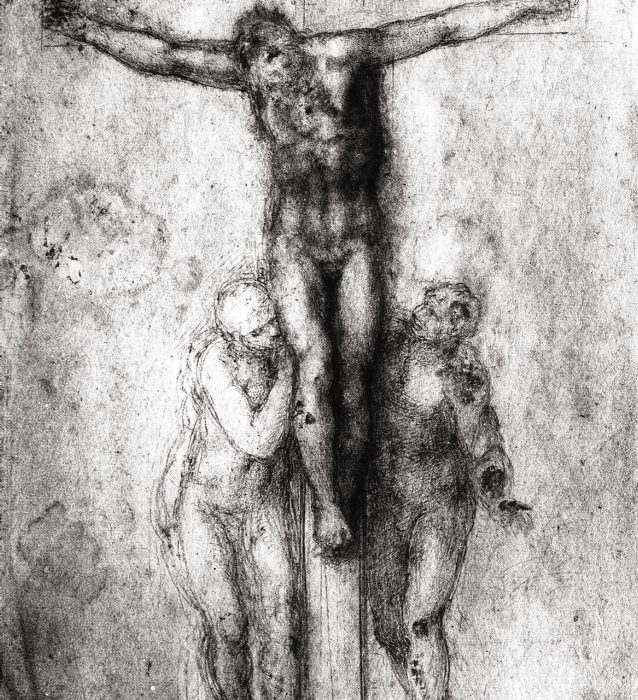
Ash Wednesday
‘In sin did my mother conceive me.’
+INJ+
‘Receive the sign of the holy cross, upon your forehead and upon your heart, to mark you as one redeemed by Christ the crucified.’
In Holy Baptism, these words were spoken over us, as the sign of the Lord’s victory over sin, death, and the unbelieving world was placed upon our heart and mind. We receive this sacred symbol into our bodies, for we proclaim that we have renounced the devil, and all of his works, and all of his ways.
We receive this sacred sign, for we bind unto ourselves the Holy Trinity, the Father who creates and preserves us from moment to moment; the Son whose blood bought us from the tyranny of the flesh, the Spirit, which weaves us into the body of Christ through the Sacramental life of the Holy Church. We make this good confession, and with these words, the flood of regeneration is poured over us.
Today though, we are again marked with a cross. Yet this is not one that seals in us the grace of God, but rather reveals in us the fate of death.
A cross of ash deforms your face to mark you as one forfeit to the Living God.
It is an ancient tradition of the Church. Yet it is one that we are often uncomfortable with. Sure, we are sinners, but do we need to show it off in such a strange and public way? Do we need to walk around and have our neighbors look sideways at us and wonder if we have fallen down and knocked our head, or accidentally fallen asleep in a chimney, only later to be reminded that today Lent has begun, for those few who keep it?
It would seem that our discomfort is not for no reason either. Does it not say in today’s Gospel reading, ‘when you fast, do not look gloomy as the hypocrites, for they disfigure their faces, that they might be seen by others.’
Yet today it seems we are doing exactly this: disfiguring our faces. Being hypocrites.
If you have ever thought this, you are half wrong. But you are then half right.
To receive the ashes upon your forehead is not a show of personal piety. It is not to signal to others that one is taking on some higher discipline for the sake of the Lord that others should admire. Rather, it is a corporate act of the Church, something done by the entire body of Christ without distinction, by the one who receives from the altar of the Lord every Sunday, and by the one who hasn’t darkened the door of the sanctuary in a child’s lifetime. It is not done to say ‘I am a good Christian’ or even ‘I am a bad but repentant Christian.’ Rather it is to say‘we, all of us, are sinful and unclean, in thought word and deed, by what we have done, and by what we have left undone.’ To know our sinfulness before God is not an act of hypocrisy; rather it is the beginning of wisdom.
‘Hypocrisy’ is a Greek word. It literally means an ‘under-judge.’ It refers to a kind of actor in the ancient world who would wear a very large, almost comical mask of clay to represent the character he was portraying. On the stage, he plays a part, marked by the mask, but under the mask, he is still his same self, unchanged, yet receiving the judgment of the audience.
To be a hypocrite means to be an actor, or if not a liar. One who simulates being someone he is not, wearing the mask of the person he wishes to be perceived as, yet beneath the show, betraying the part he plays.
Jesus teaches us that when we pray, when we give an offering, when we fast, that we do no good work to be seen, for only God in heaven sees who we really are.
Christ later goes on to speak violent anathemas, curses against the hypocrites, calling us white washed tombs, that on the outside are beautiful, but within are filled with rotting corpses. He attacks our preaching, our proselytizing, our ‘out-reach,’ proclaiming that we cross sea and lands to ‘make disciples’ but in fact only form twofold a child of hell, for we do not convert them to the Lord God, but to an image of our own making, after our own likeness.
We put on a show, that we may be admired by others. But our father who sees in secret, knows what we really are: a white washed tomb, a child of hell.
We indeed are actors, frauds, hypocrites. Yet it is not in placing the ashes upon our heads that we make ourselves so. Rather, it was in our baptism. We said we renounce the devil, and all of his works, and all of his ways, yet his ways remain the ways of our life, and his works remain the works of our hands. These works we do not publicize. We do them in the privacy of our homes, only to be seen by an unlucky few in our families. We do them in the privacy of a locked room, only to be seen by our governmental benefactors. We do them in the privacy of our minds, only to be seen by the strangled throat of our conscience. We do them in secret. But our father, who sees in secret, shall reward us.
We betray our baptism constantly, though we make a show of affirming our vow to God every time we draw the sign of the cross upon ourselves.
It is not the bearing of the Lenten ashes that is the act of hypocrisy. Rather this is our first act of honesty, for in it we know ourselves only as what we actually are, for we are nothing more than a body of corruption, an open sepulchre; dust, and to dust we shall return.
The season of Lent now begins, an ancient time of prayer and fasting. It is a time that we meditate on the fallenness of mankind, and repent of it, turn away from it, hide our face from it, for we can no longer bear to see our well-kept evil.
We fast during Lent, a most venerable practice, giving up this or that. We do not do this so that we can show our devotion to the Lord, nor to reveal our discipline to our neighbor. Rather, we do it that we might be forced to recognize the absolute weakness of our flesh and will.
We think we can do anything, that with enough effort we can get anything we want. But give up coffee, or alcohol, or Netflix, or meat, or bread, and we are forced to realize how feeble we are. Without our stimulants, we can barely work. Without our downers, we can barely sleep. Without our food, we can barely walk. Without our entertainments, we can barely smile. Without the constant addition of things to our life, we can barely function in any way at all. We are nothing in ourselves; we merely consume, and find our only comfort in the consumption.
We fast, and we are overcome by our covetous minds. Our meditation day and night is on that which we have given up, no matter how small it might be. No longer do we think of ourselves; now we think hour upon hour about that thing that we have put away, and only for forty days. We are forced to realize that we are not only hypocrites, but idolators, for we are enslaved to a thing made of glass or grain or electrons, and our heart yearns for it, for we love it, we trust it, and we fear its absence. And it cannot be otherwise:
‘For in sin did my mother conceive me.’
Yet though in times of plenty, our mind dwells upon itself, either its own greatness in pride, or its own failures in self-loathing and despair; and though in times of want, our mind dwells upon the things it desires, the lusts of our hearts; yet in Lent, acknowledging our utter corruption, we turn our minds away from ourselves, and away from all created things, and we look forward. Forward to the cross, and to the Christ, who alone shall satisfy the desire of every living thing.
For this reason, dear Christian, let us keep this Holy Season of Lent, with prayer, and fasting, and repentance.
*****
I said before that it was not in bearing the ashes that we make ourselves hypocrites, but in our baptism, and in our receiving and making the sign of the Holy Cross. And this is true. We lied when we said that we renounced Satan. We lie when we place Christ upon our hearts, for we are children of our father the devil, who is a liar, and the father of lies.
But baptism is not a thing that we do, but a promise that our God makes. Let God be true, and all mankind liars. We do not keep our vow to God. We do not keep our vow to the Church. But God keeps His vow to us. Though perhaps we cross ourselves as a show of our piety, yet what we actually trace upon ourselves is a sign that was placed upon us by another, by the hand of a priest through whom God claimed us as His own.
Let the sign of the cross remain upon us, though we remain weak, liars, corrupt, and hypocritical; for the claim of God made in baptism, to wash us of our sins, and cleanse us from all unrighteousness, is His word and promise to keep. And He will keep it.
He will purge us with hyssop, and we shall be clean.
Now only, we bear the ash, and look up from the dust; up to the distant cross, which still seems so far away. We look up, and see a man upon it; a man who beseeches us, from the depth of His unsearchable compassion:
‘Return to me, with all your heart.’
+INJ+
Preached by Pastor Fields
Sermon Texts: Joel 2:12-19; Psalm 51; 2 Corinthians 5:20b-6:10; Matthew 6:1-6, 16-21.