
Sermon for the Twenty-Second Sunday after Pentecost
‘The dead do not praise the Lord.’
+INJ+
We hate to think about death.
As much as possible, we ignore it. In every way, we chase after our youth. We dye our hair to look younger. We work out to feel younger. We take supplements to make our skin and eyes and fingernails seem younger.
When we can no longer ignore the fact of death in others, when our grandparents, then our parents, pass on; we are overcome by grief. When we can no longer ignore the fact of death in ourselves, we panic. We somehow always seem shocked that what no sinful man has ever avoided is somehow about to happen to us as well.
In our more logical moments, it can seem almost humorous, in a very dark way, when people who become deeply ill say something like, ‘How can God let this happen to me?’ I mean… how could He not? If the Tax Man will eventually catch up to you, so will the Reaper. And God has given His grudging approval to both.
But no one laughs when a death seems to us particularly unjust. No one laughs about the death of a child, an infant, an innocent. It is then that the question, ‘How can God let this happen?’ seems far from humorous. In that time, it seems dead serious; and more so, it seems a dead serious accusation of the God that allowed such a death.
No small number of people have lost their faith because they were faced with such an untimely, and intolerable, death. It is in times like that that we hate death the most, and the God who allowed it.
Death was hated in the times of the Bible not because it was an end of natural life, or because it was viewed as unjust. Rather it was hated because the dead do not remember the Lord. The end of memory – that was the sting of death.
You do not remember what you ate yesterday for breakfast, for we are a forgetful generation. There is nothing more pleasing to the mind of us who sin than forgetfulness. What is more pleasing than not knowing? Ignorance is bliss. Ignorance of our own misery is bliss. Ignorance of our own shame is bliss. Ignorance of our own past is bliss. What greater fear is there, than to be reminded of the sins of our youth.
God granted wine, to gladden the hearts of men. Man invented whiskey, to numb the conscience of mankind.
I once saw a certain Korean gentleman, who has since passed, who said, ‘Being an adult is the art of forgetting, or at least pretending to forget. Forgetting what one has heard, and forgetting what one has done.’
How forgetful are we? We do not even know our own forefathers. You know your parents; maybe you know your grandparents well enough? Perhaps. But your great grandparents? How far back does the line of your memory draw before it is cut off; before the memory of your lineage darkens to blackness; how far, before your ancestors are dead to you?
Think of all who are dead to you; all who worked and suffered and cried and strove in their own time to ultimately give you life. Yet though they gave you life, you know not their name. They are dead; they are those buried not just in a grave of some lonesome graveyard, but buried in the crypt of your mind, beneath unmarked earth, with not even an effaced stone by which to recall their name.
‘The sons of this age marry and are given in marriage’, that you may have children, that life in this world can carry on. But time will devour all; and your name will be lost to the memory of your grandchildren and great grandchildren. You will no longer be a parent, but an assumption; you are only known to have ever existed because you must have existed if the people alive now are to explain how they got here. You will be known to have lived for this reason, and none other.
‘Teach us to number our days, O Lord, that we might know wisdom.’ For there is no greater wisdom than to know that the breath of our mouth and the beats in our heart are as numbered as the days of our life. These too shall cease.
Walk upon the dust of the ground as you leave this day, kick at the grass, gaze into the earth, the mother of flesh. Even ‘from dust thou art’ so to this ‘dust shalt thou return’. With patience this earth awaits you, to devour you; for out of its generosity it grants you daily bread, but in its justice, it will demand of you ‘the end of all flesh, for the earth is filled with violence.’
On that day, O Christian – and I do not say this lightly, for the day of your death will be the day when you shall be called upon more than any other to be a Christian – on that day, close your eyes to this world, to this life, and depart in peace.
The world shall see you leave, your corpse shall be commended into the earth from whence it came, and you shall descend into hell. You shall be reckoned among the souls in Sheol.
Lost to the world of the living, you shall be in the realm of the dead. Yet, you, who are marked with the Cross, shall you weep? Shall you hide in terror? Will you weep as those who have no hope? A cross is born upon your forehead and in your heart, and an ancestor whom you do not remember, him who is your father of whom you keep no portrait, for he is forgotten to you, this one will greet you.
Abraham, the father of your great nation, will greet you in blessed silence. Abraham, the fountain of the nation of Israel, the everlasting Church, the people of God.
Before him dwell the wretched faithful.
You shall consider yourself damned, and among the dead. You shall cry out ‘Where is your God?’
Who do you think will answer you? Who will comfort you? Perhaps a philosopher, who can explain all the mysteries of life. Perhaps a theologian who can frame all our sufferings in a faithful way. Perhaps a saint who can be an example to us of complete submission to the will of God.
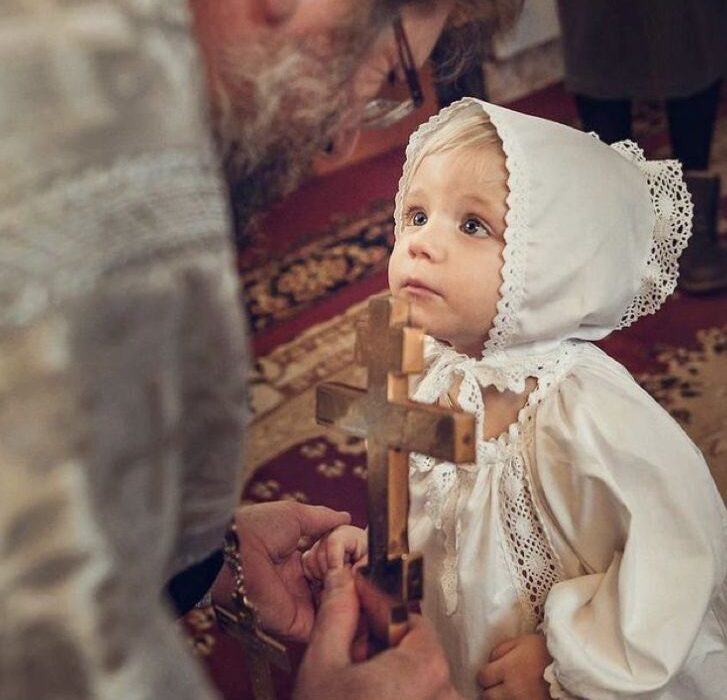
Or perhaps a small child, one who died an untimely and intolerable death. You see, he has not yet become an adult. Unlike the Korean gentleman, he has not yet learned to forget. He has not yet learned to forget his baptism.
So the little child speaks to you: ‘Our God is in the heavens; he does all that he pleases.’ ‘Blessed is the name of the Lord forevermore.’
You shall say, ‘But child, why do you, who of all people should have lived longer, continue to bless the Lord?’
And he might say, ‘The dead do not praise the Lord, nor do any go down in silence. We who have fallen asleep are not dead, and our song shall hallow the halls of hell unto the end of this age; for Christ is our life, even as He has been the life of all the forgotten. For this our father Abraham, though he descended to dwell in this earth before his offspring became as the sands of the shore, now gazes upward upon a Church more numerous than the stars of the sky. This our father Isaac who was promised a land flowing with milk and honey in the world of his sojourning, though never receiving his inheritance in the brevity of his mortal life, has become an inheritor of the life of the world to come. This our father Jacob, who saw God face to face for but a moment, and died, now is called among us Israel, for he shall see God.
‘For God is not the God of the dead, but of the living.’
‘For behold, a fire we have seen within a bush descend unto this now sacred ground. The consuming fire of our God, the God of our fathers, whom you have forgotten, but whom now you shall know forever. This fire in the bush is Christ. See how He calls out from the bush from everlasting to everlasting, ‘I am that I am.’ And even as He is, we who once were, shall be forevermore, for we are in Him, and He is in us, even as you are in Him, and we are now in you, one communion, one Church, united to one God, awaiting one resurrection.
‘For you, late-born one, shall not be forgotten by Him, for even as ‘he is remembered throughout all generations’, so are you remembered in Him who is life.
‘Heed my words, for from the mouths of babes has God established His strength. Though you, even as I, were born of a mother, yet to die; you have been received into the earth, the mother of Adam, your first father. And yet no one is conceived in a mother that shall not be born of a mother; even as no one who is sown into the earth shall not be resurrected, for except a seed fall into the earth and die, it remains alone, but if it dies, it grows into all godhood.
‘Therefore, wait with us, new-born one, you who were born of water and the word, with all your fathers, even Abraham, Isaac, and Jacob; for we will pass before you. Remember us, even as we pass before you, for a hundred generations. For we are never dead to you; neither your ancient fathers; the ancient of the faith. For our God is not the God of dead, but of the living. Become wise, and remember your fathers, that you may teach your offspring the Gospel of life.’
All this the child might say when you ask, ‘Why do you bless the Lord?’
Or maybe that is something I might say, during one of my more insufferable sermons.
Maybe a child wouldn’t say any of that. But rather, he might give you an answer that makes sense.
‘Why do you continue to bless the Lord?’
‘Because I remember when my mommy and daddy brought me to a big building with a cross in it, and a man in a dress poured water on me and dabbed oil on my head. It was very cold, but I saw something. Maybe no one else could see it, or maybe they just forgot, but I saw a bird fall upon me from up high, and I heard a voice tell me, ‘There, there, little child, don’t cry, nothing in life or death will hurt you. For where I am now, you one day will be also. And there, you will remember everything, every one of my promises. And if you cry now from the water, or cry when you grow up from sadness, or cry here in the grave from despair, it will be okay. I will wipe every tear from your eye. The voice probably said the same thing to you. But you’re a grown up, you probably just forgot.’
In either case, he will not be wrong. How then will you respond?
‘Teacher, you have spoken well.’
+INJ+
Preached by Pastor Fields
Sermon Texts: Exodus 3:1-15; 2 Thessalonians 2:1-8, 13-17; Luke 20:27-40.